Find Your Joy & Creativity
What Reading Your Writing Aloud Can Teach You
Ana
12/21/20254 min read

(Disclosure: As an Amazon Associate, I earn from qualifying purchases. This comes at no extra cost to you.)
Dear Joyvity™ Friends,
Did you know that many writers you admire do something surprisingly simple when they’re stuck, revising, or unsure if a passage works?
They read their work out loud. Just to hear it. And the reason is simple: the ear catches what the eye politely overlooks.
A lot of writing courses do cover this important aspect of writing and I am capturing some of those ideas in this blog. Reading your writing aloud isn’t a trick. It’s a way of listening to your writing and what sounds natural beneath the words.
1. You Hear When the Writing Is Trying Too Hard
On the page, effort can hide behind elegance.
Out loud, it can’t.
When a sentence is too polished, too abstract, or trying to sound “writerly,” you’ll feel it immediately. You may slow down. You may stumble. You may sense a slight resistance in your gut.
That doesn’t mean the idea is wrong.
It usually means the language isn’t right yet.
2. You Discover Your Natural Rhythm
Every writer has a rhythm — even if they’ve never thought about it.
Reading aloud reveals:
where you naturally pause
which sentences want to stay short
where longer lines feel earned
how your thoughts actually unfold in real time
Some voices move in waves. Others arrive in clean, direct beats. Problems arise when we force a rhythm that doesn’t belong to us.
Your voice isn’t something you choose.
It’s something you recognize.
3. You Learn What Sounds Honest, Not Just “Good”
There’s a difference between a sentence that looks good and one that sounds true.
Reading aloud helps you hear when a line feels emotionally accurate for your story — and when it sounds like something a writer thinks they should say.
A useful question to ask while reading: Would I actually say this out loud to someone?
If the answer is no, the sentence may need rework— not deleting, just returning to something more human.
4. Flat Dialogue Reveals Itself Immediately
Lines that seem fine on the page often feel stiff, explanatory, or unnatural when spoken. Reading dialogue aloud shows you:
when characters all sound the same
when dialogue explains instead of reveals
when a line exists only to move the plot
If it feels awkward to say, it will feel awkward to read. Your ear catches this faster than any rule.
5. You Start Editing With Your Ear, Not Just Your Eyes
Visual editing focuses on tightening and polishing.
Reading aloud introduces a different layer:
where energy drops
where pacing drags
where repetition works — or doesn’t
where silence might be stronger than another sentence
This kind of editing is about flow — not polish.
6. You Build Trust in Your Own Voice
Over time, something quiet but important happens.
You stop comparing your voice to others and start recognizing it by sound. You learn what feels natural to say — and what doesn’t.
That trust changes how you write. Voice becomes something you listen for.
7. How to Use This Without Overthinking It
You don’t need to read everything. Start small and intentional.
Try reading:
one paragraph you’re unsure about
a page of dialogue
the opening or closing of a scene
anything that feels flat or that you worked too hard at
Read slowly. Pay attention to where you want to adjust words before you consciously decide to. This one is hard, let your instinct take over before your mind tries to.
Those instincts are already editing for you.
Rituals that Can Support Your Writing
Here are a few writing ritual essentials that I use and that can help anchor your own writing sessions. They’re not just products, they all have a role:
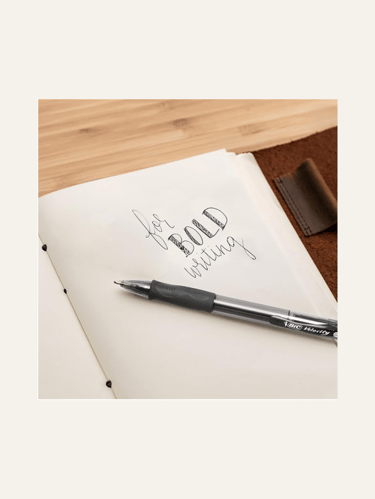
Journal – PU Leather, elegant and practical, available in 10 colors


Its thread-bound lay-flat feature makes it easy for all hand users to write on every page. It has 216 ruled pages that don’t ghost or bleed-through. Just lovely!
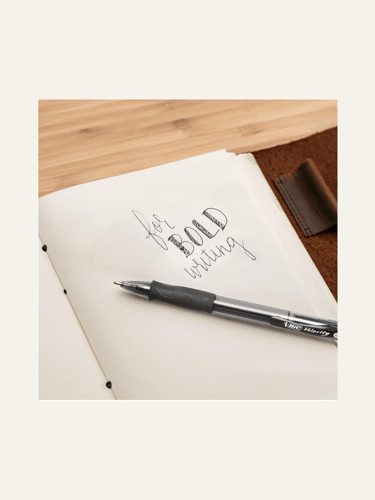
Pen – Bic Velocity 1.0 in black
I have used these for years due to their comfortable grip and easy glide system. I won't write with anything else!
A Candle That Grounds You
Choose a scent that signals focus — sandalwood, lavender, or something personal that reminds you of warmth and stillness. This here is the one I prefer.


A Ceramic Mug That Feels Like Yours (Unisex)
There’s something grounding about holding the same mug every day — it becomes part of your creative identity. I love this one: the image on the outside, the writing on the inside, the feel & the shape.


An Hourglass That Binds Your Time
Flipping an hourglass at the start of your writing block turns time into something tangible — a visual ritual that signals focus, presence, and the gentle pressure of now. This is mine - 60min.


👉 You can also explore more in my gift guide for writers: Gift Ideas to Support a Writer’s Daily Rituals
Final Thoughts
Reading your writing aloud reveals your voice and whether your writing fits your story or stumbles.
It shows you where the writing is alive, where it’s tense, and where it wants to sound more like you.
Sometimes, you just need to hear it.
Warm wishes — and trust in your writing,
Ana ✨
Copyright © 2026 Ana and Joyvity™. All Rights Reserved.